Celebrating gardens in Calgary, Southern Alberta, Canada- Red Deer, Central Alberta, Canada- Lansing, Upstate New York, USA- by Sylvan Lake, Alberta, Canada- Salem, Rural Connecticut, USA- Rural Massachusetts, USA- and Urban West Coast Vancouver, BC, Canada. Add gardens throughout the world travelled to near and far. Children, children never contrary, how does a garden grow, with droplets of rain and loving care and grandchildren all in a row.
Showing posts with label Gardening in Red Deer. Show all posts
Wednesday, May 15, 2019
Thursday, July 16, 2015
Cimicifuga, Black Bugbane, Fairy Candles
Here is a link to a perennial I would like to remember from our 28 year old home. This perennial was originally planted about 25 years ago in the front flower bed and never really thrived there. I planted it there as there was a big spruce tree shading the flower bed and the Bugbane is known as a shade plant. When we redid the front bed as a full sun prairiescape garden I moved the Bugbane to a garden tucked beside the house with a northeast exposure. Since then it has thrived and this year, by mid July, is already showing signs of flowering. The foliage on this plant is healthy and a vibrant purple black colour. Not knowing whether I could split the plant and have it thrive I dug beside the plant and carefully uprooted one single rooted plant. I planted this "upstart" plant in Amy's shade garden out at the cabin.
![]() |
| New Start at Sylvan Lake |
| Foliage of the original plant |
| Look carefully and you can see the flower starting |
Update October 8, 2023 (Thanksgiving Sunday)
The tiny volunteer shoot from the original plant, transplanted in 2015 to the cabin and then to the Lakehouse in 2016 is now in fall of 2023 a thriving Black Bugbane with showy blooms. Next year I will take a photo a little earlier in the fall before the frost and when the background is more worthy of it's stateliness. Yesterday Papa took down the sundeck railings and some of the decking in preparation for our new deck. We have had frost for a couple of weeks now but this morning was the first sign of damage to the Bugbane.
A few more interesting facts about the Bugbane:
The Cimicifuga has many common names.
Snakeroot because of the sinuous nature of the roots.
Bugbane because it was used to chase away bugs. Its scientific name, Cimicifuga says the same in Latin.
Cohosh is an Algonquian name meaning rough referring to the root that is not black, but dark brown.
Fairy Candles because the tall raceme has the appearance of white tapers.
Friday, July 25, 2014
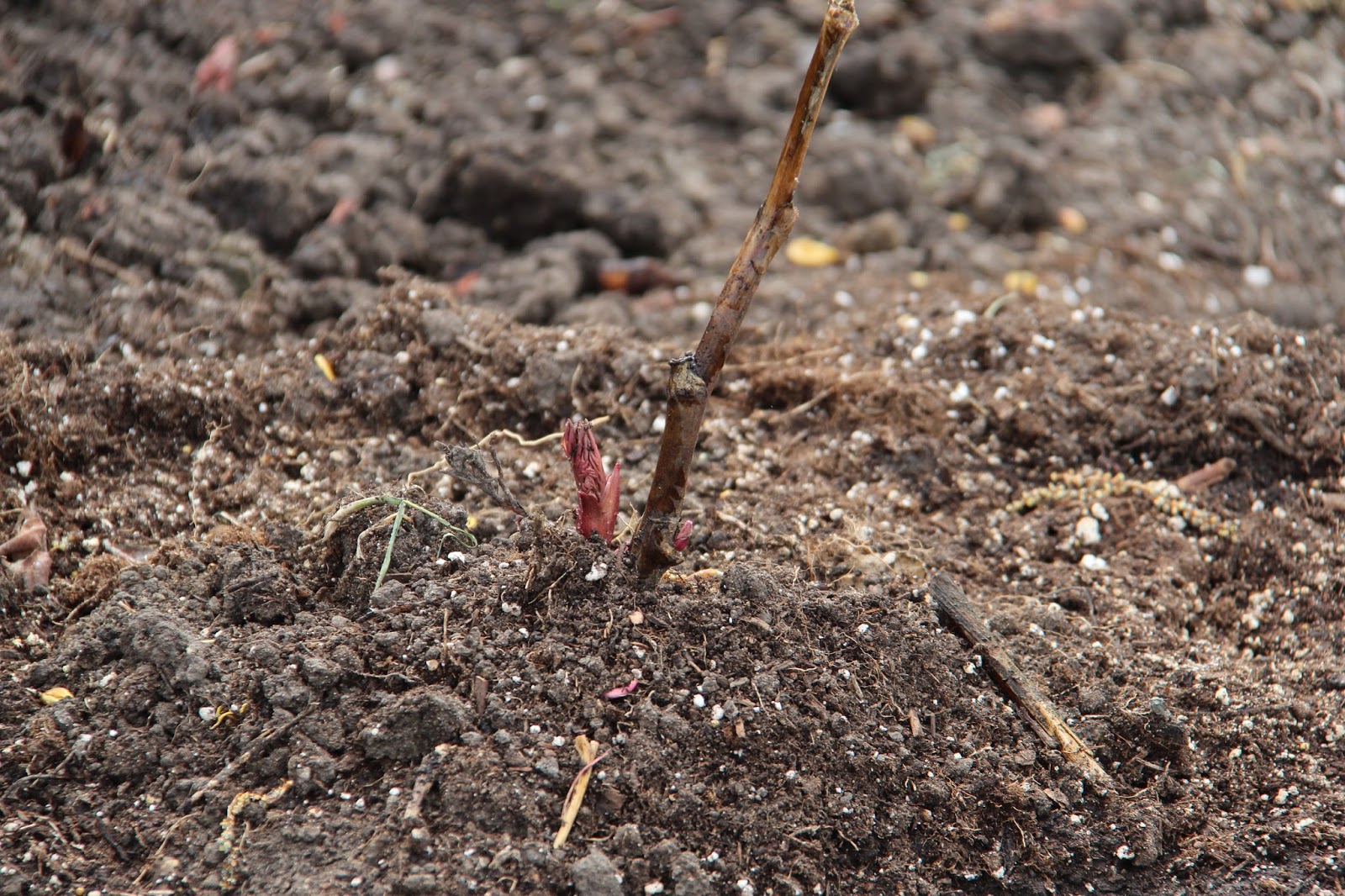
"Pastel Splendor" Itoh Peony
Fast forward to spring of 2016. The Itoh Peony has moved to Norglenwold after spending the fall and winter in Kuusamo, both on Sylvan Lake. The lake was out the earliest as far as available records could be found, April 15, and it seemed like a good time to move the Itoh. We have been preparing the front flower bed and moved the Itoh on
| July 2014 |
This Itoh Peony was planted near the end of July in Benny's garden (southwest exposure).
| July 6, 2019 First blooms of many more to come this year |
| July 6, 2019 First blooms of many more to come this year |
July 7, 2022 (First planted in Red Deer 2014)
Friday, July 4, 2014
Rhubarb
- We now have eight rhubarb plants in the yard and are hoping for a good crop of rhubarb for pies, jams and crisps.
Click Rhubarb for a link to more information.The two newest plants, seen below, (July 2014) are "Canada Red".
Of the other six plants, six of them are Strawberry Rhubarb (three clumped together), which is similar to the Canada Red. The sixth rhubarb is a greener, hardier, yet less sweet variety (perhaps a German Wine). - Rhubarb is a vegetable, but it is often cooked, sweetened and combined with other fruits as a dessert. It is an ancient plant traced back to China in 2700 BC. It was used for medicinal purposes as a laxative, to reduce fever and cleanse the body.
I have always cut the rhubarb stalks when harvesting but recently read that it is better to pull the stalks rather than cut them. The stalks detach easily and this way doesn't leave a stump to rot. The leaves are poisonous and should be discarded. It is best to pull the young tender stalks, leaving three or four strong stems.
Tuesday, June 24, 2014
Peony Bed- Elsa Sass
This Elsa Sass Peony was planted in the Peony Bed to replace one of the peonies that didn't survive this year's harsh winter (2013/2014). It is in a northwest flower bed at the front of the house and receives full sun.
Thursday, June 12, 2014
Tulips
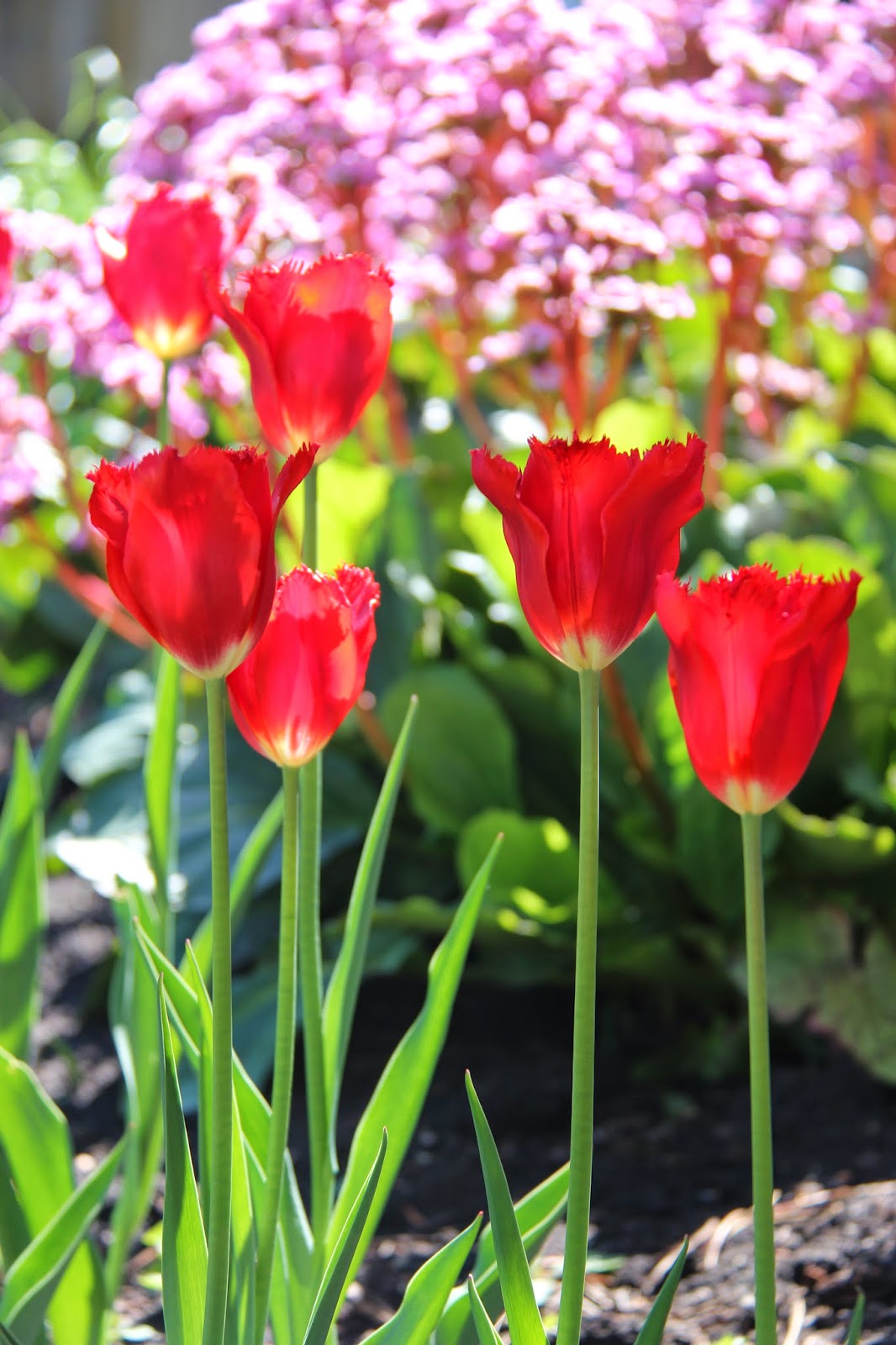
These tulips were planted in a front flowerbed with full sun in the fall of 2013. After a winter with record snowfall and extreme cold they bloomed about June 1 while Grandmaman was visiting in Ithaca. Thinking they might only last a few days Grandmaman took these photos on June 3 but much to our surprise they are still stunning almost 2 weeks later.

It is now June 24, over three weeks after the tulips bloomed and they are just beginning to fade. Perhaps the cool spring and late arrival of summer weather gave these tulips just what they needed to maintain their blossoms. In the photos below you can see that the red ones are loosing their petals and the red and white ones are beginning to wilt.

Saturday, July 20, 2013
Pumpkins and Bunnies
This year we planted a pumpkin plant in the front garden along with grasses, a weeping caragana and a bergenia. It was planted as a small plant as soon as the threat of June frost was over and now about four weeks later it has overtaken the area and has a multitude of blossoms that will hopefully soon become pumpkins. We plan to crop extra vines in order to allow the pumpkins to grow as quickly as possible, given our short frost free season.
This garden is visited regularly by the neighbourhood bunny who likes to rest in the shade of the plants as well as on the cool shaded lawn. So far he has nibbled on the tall grass but has left the pumpkin and bergenia alone.
| Lots of male flowers |
| A female flower with the start of a pumpkin |
5 days later, September 12 we remeasured. Our pumpkin now measures 16 inches long and is 28.5 inches. In five days it grew 3 inches in length and 4 inches in circumference.
We are closely watching the pumpkin patch, as the littlest pumpkin (below), which used to be the largest pumpkin, began to get soggy underneath so we harvested it today (Sept. 12). It has started to change into a deeper orange colour but although it isn't quite "ripe" we removed it from the vine before further damage occurred. We will watch daily for any damage to our biggest pumpkin.
Subscribe to:
Posts (Atom)